A bright Valencia flat with original tiles and a balcony can feel like an immediate yes. But before emotion takes over, checking the energy certificate before buying in Spain can reveal whether that appealing home is likely to be comfortable in August, chilly in January, or expensive to improve.
In Spain, the energy performance certificate is not just another document for the solicitor’s file. It is a useful early warning system for buyers, particularly when comparing older city properties with newer developments in Valencia, or villas along the Costa Blanca. It will not replace a technical survey or legal due diligence, but it can tell you where to ask sharper questions before you make an offer.
Why check an energy certificate before buying in Spain?
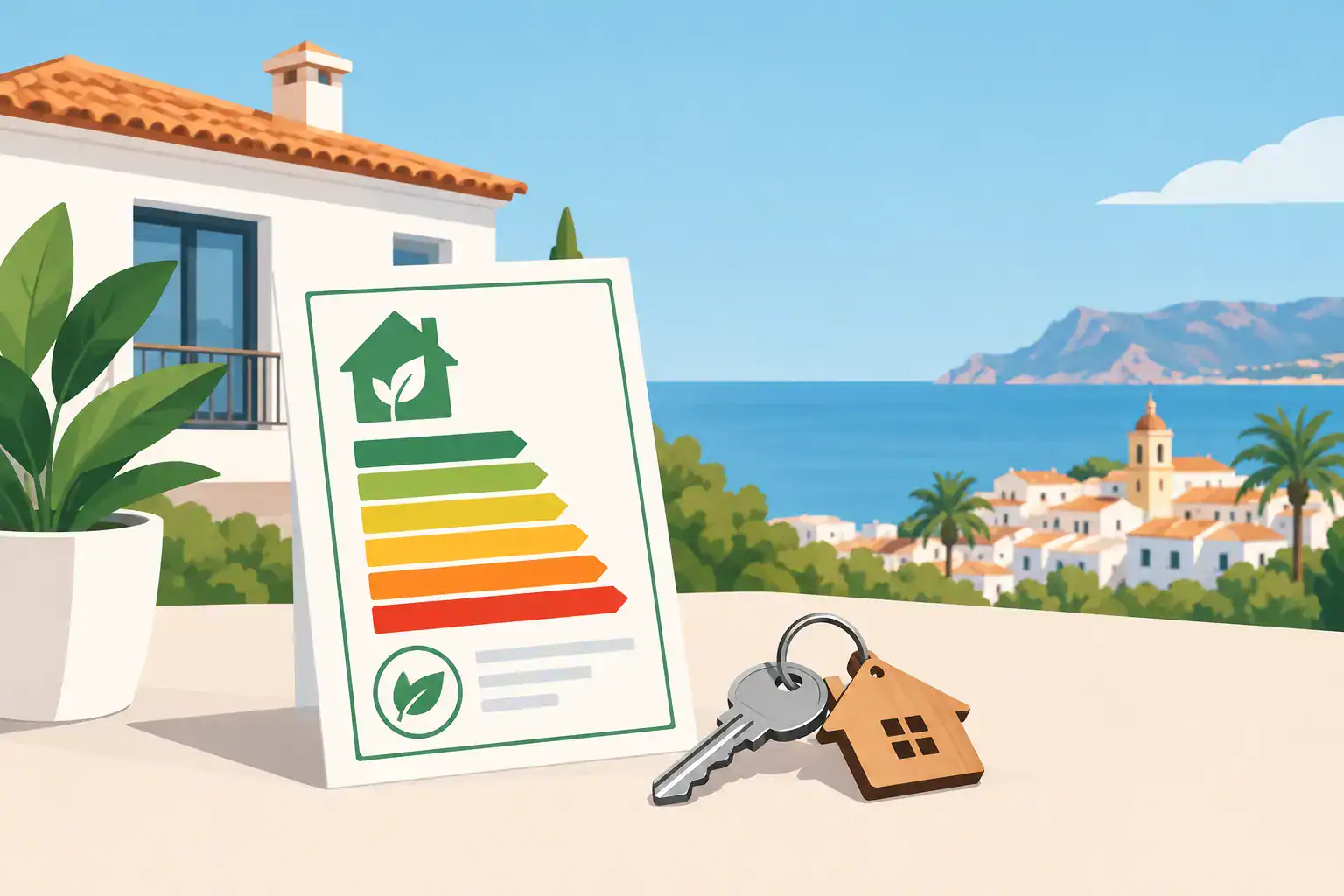
Known in Spain as the certificado de eficiencia energética, or CEE, the certificate gives a property an energy rating from A to G. A is the most efficient, while G indicates higher predicted energy use and carbon emissions. The certificate normally displays two scales: one for energy consumption and another for CO2 emissions.
Spanish sellers are generally required to have a valid certificate available when marketing a property and to provide it to the buyer. It is usually valid for ten years, although a major refurbishment affecting the building’s performance is a good reason to obtain an updated one.
For a buyer, the value lies less in the letter itself and more in what sits behind it. A low rating may point to weak insulation, old windows, inefficient hot water equipment, electric resistance heating or little protection from the sun. None of these automatically makes a property a poor purchase. They do, however, affect your likely running costs, comfort and renovation budget.
This matters in Valencia. Summer heat, humidity, orientation and shading can have as much influence on day-to-day comfort as winter heating. A south- or west-facing top-floor flat with ageing glazing may be perfectly liveable, but only if you understand the cost and practicalities of cooling it effectively.
What the certificate can tell you
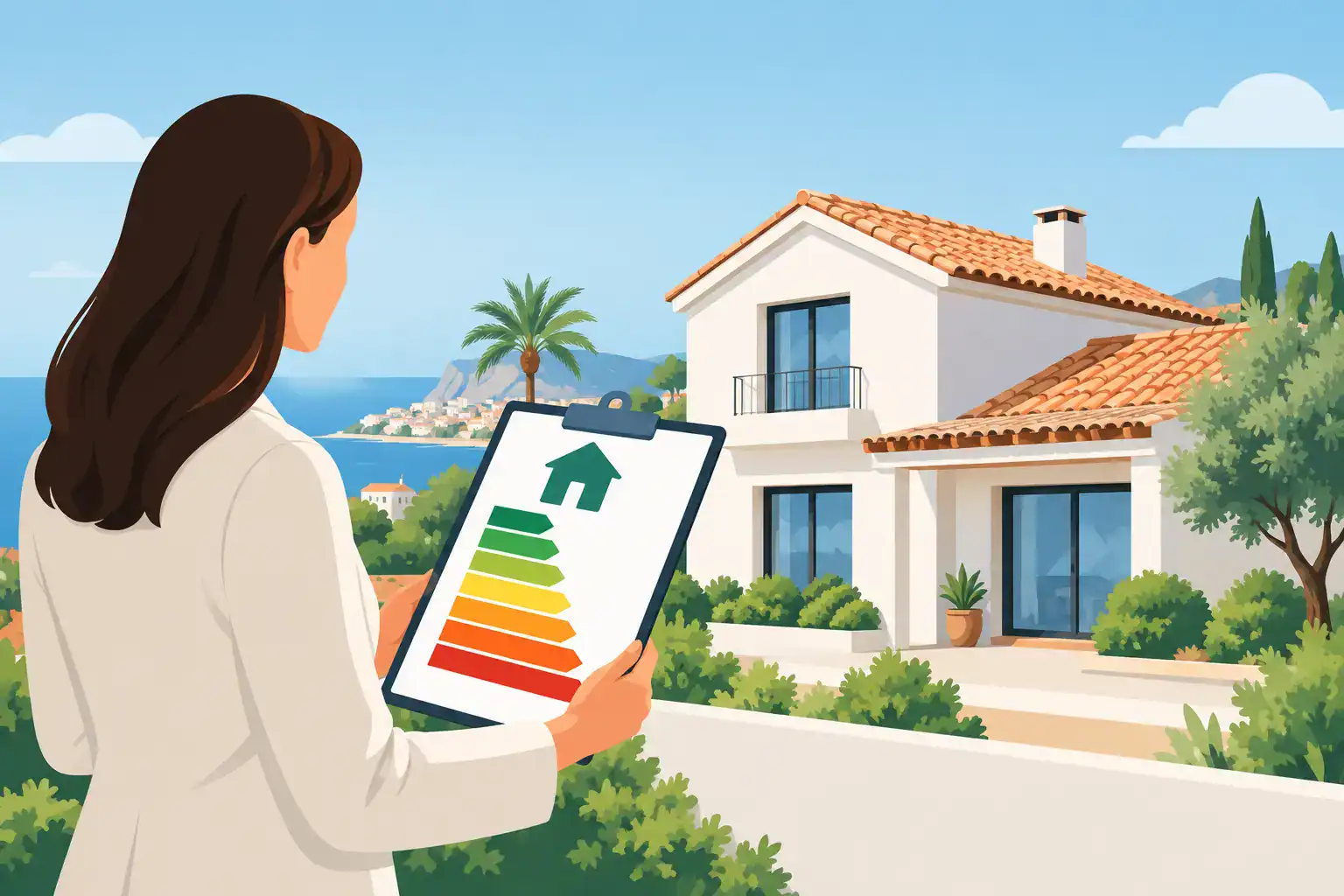
A Spanish energy certificate is prepared by a qualified technician who assesses the home’s envelope and installations. Depending on the property, this can include walls, roof or ceiling, windows, heating, cooling, ventilation and domestic hot water. The report then uses standardised assumptions to estimate annual energy demand and emissions.
The accompanying document often includes recommendations for improvements. These may be relatively straightforward, such as fitting better glazing, adding solar shading, replacing an old boiler or installing more efficient air conditioning. Others can be more substantial, including insulating a roof, external walls or floors.
Read these recommendations as a starting point, not as a renovation quote. A certificate may suggest insulation without confirming whether it can be installed in a protected building, whether the owners’ community must approve works, or whether the space and construction method make the solution realistic. In a flat, the most meaningful upgrades may concern communal elements such as the façade, roof or central systems, which are not yours to change alone.
The rating is also useful when comparing similar homes. If two otherwise comparable properties have a large gap in performance, that difference deserves investigation. Ask whether one has recently replaced its windows, installed ducted air conditioning, upgraded hot water production or benefited from a renovated building envelope.
What an energy rating cannot tell you
A certificate is not a guarantee of future utility bills. Actual consumption depends on how many people live in the property, the temperature you prefer, how often you are there, energy tariffs and the way equipment is used. A holiday home that is occupied only occasionally will behave very differently from a family home used throughout the year.
It is also not a full building survey. The technician’s assessment is designed to calculate energy performance, not to diagnose structural movement, hidden damp, poor plumbing, illegal alterations or planning issues. An apparently respectable rating does not prove that an air conditioning system is correctly installed, that a roof is watertight, or that windows have the required permissions in a listed or protected building.
That is why buyers should be wary of treating an A-to-G label as a simple pass or fail. A renovated historic flat might have a middling rating but excellent natural ventilation, attractive ceiling height and manageable running costs. Conversely, a newer home with a better rating may have a layout, orientation or communal charge that does not suit your needs.
Questions to ask before you offer
Ask the selling agent for the full certificate, not only the rating shown in the advertisement. Check its issue date, the property address and reference, and whether the stated floor area corresponds to what is being sold. In a house, make sure the certificate relates to the entire home rather than an outdated or incomplete record.
Then ask practical questions. Which heating, cooling and hot-water systems are currently installed? When were they fitted and serviced? Are there awnings, shutters or blinds that materially reduce solar gain? Have the windows been changed, and if so, are they double glazed and thermally broken? In a top-floor property, has the roof been insulated or recently repaired?
For flats, request information about the owners’ community. Planned works to façades, lifts, roofs or central installations can be positive for the building’s condition, but they may also lead to special contributions. If the certificate recommends improvements to communal elements, meeting minutes and planned budgets can be more revealing than the recommendation itself.
It is sensible to request recent electricity and gas bills where available, while recognising that they reflect another household’s habits. They are evidence to discuss, not a promise of what you will pay. For an older property where substantial works are already on your agenda, an architect or technical professional can assess the likely scope, permissions and cost of improving performance before you finalise the purchase.
How energy performance affects negotiation
A poor rating can support a more disciplined offer, especially when it aligns with visible evidence: single glazing, an uninsulated top floor, outdated equipment or no viable cooling strategy. The point is not to use the certificate as a bargaining trick. It is to price the property according to the work and risk you are taking on.
The opposite is also true. If a seller has invested in efficient windows, insulation, solar control and modern systems, those improvements may justify a stronger price compared with an apparently similar but untouched property. Ask for invoices, guarantees and documentation where possible. Buyers should pay for genuine value, not for broad claims that a home has been ‘fully renovated’.
New-build properties usually perform better on paper because they must comply with modern technical standards. Yet buyers should still examine the certificate alongside the specifications. Orientation, glazing, air-conditioning design, ventilation, shading and community facilities all influence whether the property will work well in real life. A high rating is reassuring, but it does not remove the need to review what has actually been specified and delivered.
Put the certificate in the wider due-diligence process
The best moment to review the energy certificate is early, before you become committed to a particular property. Use it to decide whether to investigate further, revise your budget for improvements or move on. Once you are progressing with a purchase, it should sit alongside a review of title, planning position, occupancy, community obligations, building condition and the terms of the sale.
For international buyers, this joined-up approach matters. A cheap flat with a G rating may still be the right opportunity if the location is exceptional, the renovation is feasible and the final all-in cost remains attractive. What creates problems is buying without a clear view of the likely works, permissions and financial exposure.
At HelloHome Valencia, buyer-side advice means looking beyond the presentation of a property and focusing on the decisions that protect your purchase. The energy certificate is one useful piece of evidence in that process, not a substitute for it.
Before you fall in love with the view, ask what it will cost to keep the home comfortable. That small question can lead to a far more confident decision.