A polished video tour can make a Valencia flat look flawless: bright terrace, renovated kitchen, a glimpse of palm trees from the balcony. What it cannot show reliably is whether the street becomes noisy at school-run time, whether the renovation was authorised, or whether the building is facing an expensive lift or façade repair. If you need to inspect Spanish property remotely, the goal is not to recreate a holiday viewing on screen. It is to gather enough independent evidence to make a sound buying decision from abroad.
Remote buying can work very well, particularly when you have a clear brief and trusted local representation. It does, however, require a more disciplined process than a conventional viewing. The person showing the property must be working for you, not simply trying to move a listing.
Start with a buyer-focused inspection brief
Before arranging a virtual viewing, define what would make you reject a property. This is more useful than a broad wish list. A couple relocating with children may need to know the exact walk to a school, the availability of a lift and whether a pram fits in the entrance. A second-home buyer may care more about winter sun, airport access and the practicalities of leaving a property empty for months.
Share your non-negotiables with the person inspecting on your behalf. Include budget, intended use, acceptable renovation work, preferred neighbourhoods, floor level, outdoor space and your tolerance for noise. Ask them to challenge the brief where local realities demand it. In central Valencia, for example, a beautiful period building may not have a lift; near the coast, orientation and seasonal rental activity can affect how a location feels.
A buyer’s adviser should also establish who owns the property, whether the seller is ready to proceed and whether the asking price has a sensible relationship to comparable homes. There is little value in a detailed remote inspection of a property that is unlikely to be a viable purchase.
Inspect Spanish property remotely with a live, unedited viewing
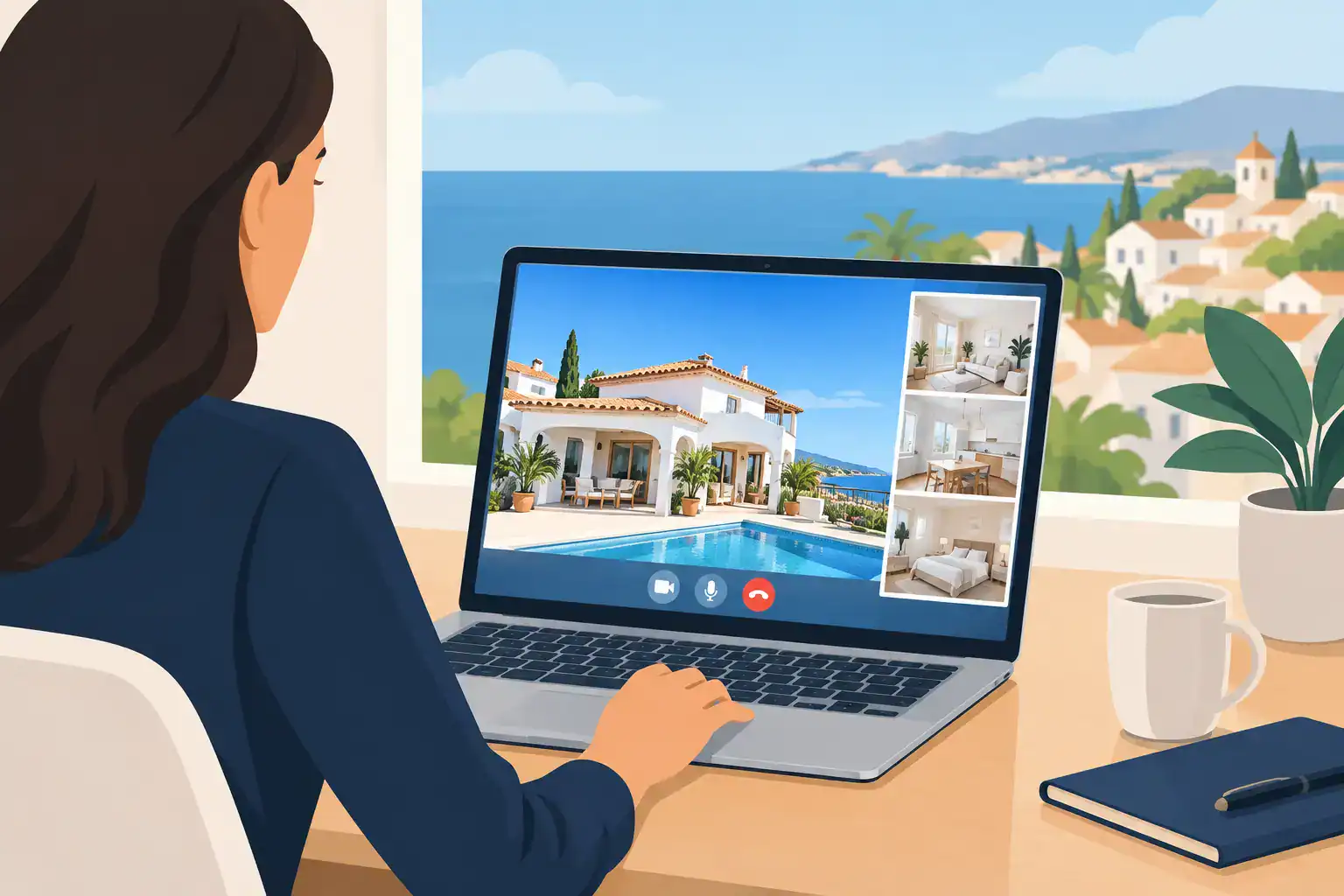
Pre-recorded videos are useful for shortlisting, but they are not an inspection. Request a live video call where you can direct the route and ask for close-ups as questions arise. The best viewing begins outside the building, not at the front door.
Ask to see the approach from the nearest main road or public transport stop, the entrance, communal hall, stairs, lift and letterboxes. These details reveal how a building is maintained and how arriving home will feel in everyday life. If parking matters, see the actual parking space and the manoeuvre into it, rather than accepting a description.
Inside, the camera should move slowly through every room in natural light where possible. Ask for views from windows, not just towards them. Check the outlook, neighbouring windows, nearby building works, traffic, bars, delivery access and any signs that a quiet street in a daytime video may be different after dark.
Be direct about condition. Request close views of ceilings, external walls, window frames, floors, bathrooms, kitchen units, boilers or air-conditioning systems, electrical panels and storage areas. Damp, cracks and poor finishes are not always deal-breakers. Their cause, likely remedy and cost are what matter. A local professional can distinguish between cosmetic wear and a concern requiring an architect, surveyor or specialist contractor.
A strong remote inspection should produce more than a video recording. You should receive a candid written report explaining what was seen, what could not be verified and what must be investigated before an offer or reservation payment. Photographs should document concerns clearly, rather than flattering the property.
Check the neighbourhood at the times that matter
A home is never only its floor plan. This is where remote buyers can make expensive assumptions. A street can appear peaceful at 11am and become busy in the evening; a popular tourist area may have a very different rhythm at weekends; and a ground-floor property may feel less private than the listing suggests.
A local representative can visit at more than one time, or speak honestly about known neighbourhood patterns. They should assess practical matters such as noise, light, access, refuse collection, nearby construction, local amenities and the condition of adjoining buildings. For buyers considering Valencia’s outer districts or coastal locations, journey times should be tested in real conditions rather than estimated from a map.
It also helps to separate personal preference from objective risk. A lively square may be ideal for a buyer seeking city life and unsuitable for someone who needs quiet evenings. The right adviser does not decide that for you. They give you an accurate picture so you can decide with confidence.
A viewing is not legal or technical due diligence
This distinction protects buyers. Even the most thorough visual inspection cannot confirm that the property matches its registered description, that works were properly licensed, or that there are no debts attached to it. In Spain, these checks must be completed carefully before you become contractually committed.
Your legal team should review ownership, charges, planning status, licences where relevant, community of owners documentation, annual costs and outstanding community fees. For a resale property, this includes checking whether alterations such as enclosed terraces, redistributed rooms or roof spaces are properly documented. For a new build, the focus changes towards the developer, building guarantees, specifications, delivery terms and stage-payment protection.
Technical advice may be needed where the inspection raises doubts about structure, damp, installations or renovation quality. This is not pessimism. It is proportionate protection in a purchase where repairing an overlooked issue from another country is far harder than checking it before completion.
Use findings to negotiate from a position of knowledge
Remote buyers sometimes worry that asking detailed questions will make them look difficult. In reality, clear evidence makes negotiation more credible. If a property needs window replacement, has an ageing installation or sits in a building with planned works, these factors should inform both price and contract terms.
Negotiation is not simply about reducing the asking price. Depending on the property, it may involve requesting documents before paying a reservation amount, making an offer subject to specific checks, agreeing that certain items remain, or establishing a realistic completion timetable. The right approach depends on demand, seller motivation and the legal position. In a competitive market, an unsupported low offer can lose the property; an informed, well-structured offer is more persuasive.
For international buyers, it is particularly valuable to have one person coordinating the findings from the viewing, legal review and any technical professional. Conflicting information is common when several parties are involved. Your adviser should identify gaps early and ensure that nobody mistakes a seller’s statement for verified fact.
Know when a final in-person visit is worthwhile
Buying remotely does not mean you must never visit. For many clients, the sensible route is to narrow several options to one thoroughly checked property, then travel to Valencia for a final viewing and to experience the area personally. This can be especially worthwhile for a first purchase in Spain, a family relocation or a home needing renovation.
For others, a final trip is not practical. A carefully managed remote process can still provide the evidence needed to proceed, provided the legal and technical checks are complete and the inspection has been carried out by someone with no incentive to minimise concerns. No process removes every uncertainty, but it should make the remaining risks visible and manageable.
HelloHome Valencia approaches remote inspections as buyer protection, not a sales presentation. That means asking the awkward questions, checking the details that do not fit neatly into a listing, and giving you a clear recommendation rather than pressure to proceed.
The right property should still feel exciting when you finally turn the key. The difference is that the excitement rests on facts you have tested, documents you understand and a local team that has been looking after your interests while you were miles away.